
Harry Kane Leads England to Historic Victory Over Spain as Roy Keane Debate Takes a Back Seat
The result was significant for several reasons. England not only defeated the reigning world and European champions on their own ground, but also demonstrated the attacking ambition, discipline and determination that have been demanded from the national team in recent months.
Kane was central to the victory, opening the scoring from the penalty spot before watching his teammates extend England’s advantage to three goals. Although Spain threatened an extraordinary comeback after Elliot Anderson’s dismissal, England held on to claim all three points and finish top of their Nations League group.
The victory also provided another opportunity to examine the growing debate surrounding England’s performances, the expectations placed on Kane as captain and the opinions of former Manchester United midfielder Roy Keane.
England Make a Statement Against the European Champions
There was plenty at stake when England travelled to Madrid for their Nations League meeting with Spain. Both countries had already secured qualification for the quarter-finals, but finishing top of the group remained an important objective.
Spain had enjoyed an impressive period of international football and entered the contest with an outstanding unbeaten record. Their ability to dominate possession, control the tempo and create opportunities against difficult opponents had made them one of the most feared sides in international football.
England, meanwhile, arrived with something to prove.
Their previous meeting with Spain had ended in a 3-2 defeat at Wembley in September. That result exposed several weaknesses, particularly when England struggled to maintain control during important periods of the contest.
Tuchel’s men were determined to produce a different performance in Madrid.
From the opening minutes, England approached the match with confidence. Rather than allowing Spain to settle into their usual possession-based rhythm, the visitors pressed aggressively, challenged for second balls and looked to exploit their physical advantage.
It was an approach that immediately created problems for the hosts.
England’s willingness to attack rather than retreat was particularly encouraging. The team appeared comfortable playing at a high tempo, with Kane leading the attacking line and providing an important focal point whenever possession moved into dangerous areas.
The opening goal eventually arrived through Kane, who converted from the penalty spot to give England a deserved advantage.
The captain’s composure was important, especially considering the pressure surrounding the occasion and his recent penalty miss for Bayern Munich.
Rather than allowing that previous disappointment to affect him, Kane stepped forward and delivered when his country needed him.
Harry Kane Shows Why England Continue to Depend on Him
Kane’s contribution extended beyond the opening goal.
At this stage of his international career, the England captain is expected to provide much more than goals. His responsibilities include organising the attacking players, helping the team maintain possession and setting the standards expected from those wearing the national shirt.
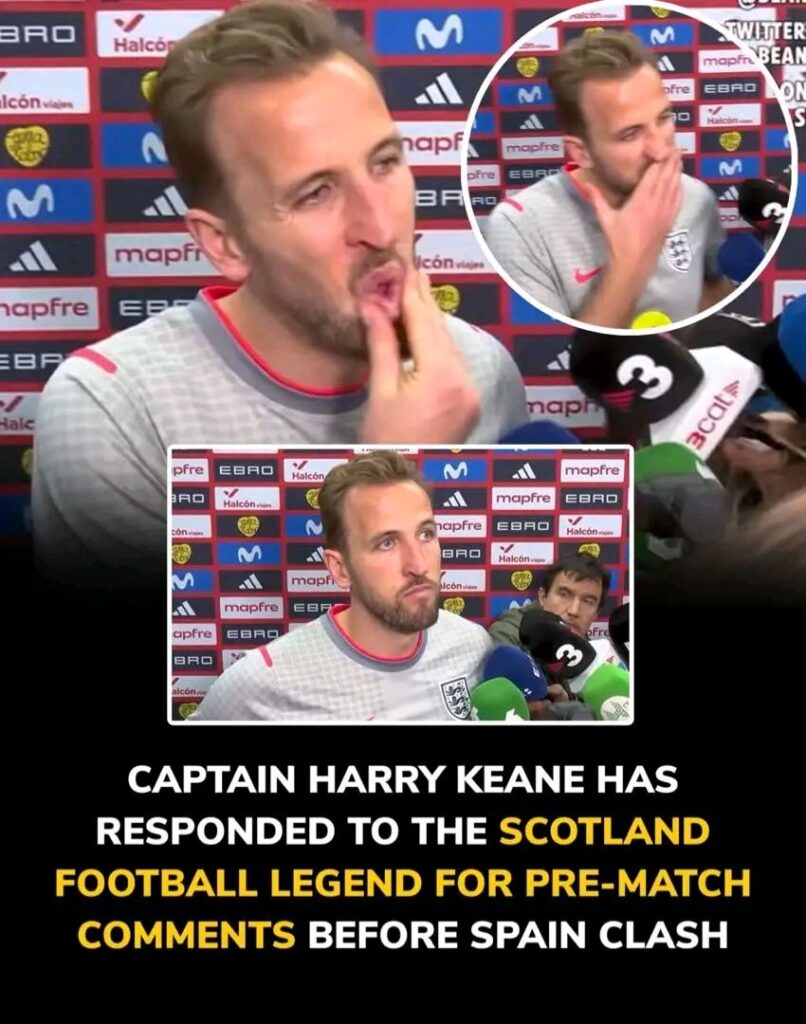
Against Spain, he demonstrated why he remains such an important figure.
His movement created problems for the Spanish defenders, while his ability to hold up the ball allowed England to bring midfielders into attacking positions.
There was also an important psychological element to his performance. Playing against a team of Spain’s quality requires confidence, patience and the ability to take advantage of opportunities when they arrive.
Kane provided exactly that.
The striker’s penalty gave England the platform they needed, but the performance of those around him ensured the advantage did not remain a narrow one.
England continued to push forward after taking the lead, refusing to become overly defensive simply because they were playing away against one of the strongest national teams in the world.
That mentality became one of the biggest talking points of the evening.
Speaking after the match, Kane described the result as an enormous achievement outside a major tournament. He explained that England had wanted to establish a clear identity and use difficult international fixtures to improve as a team.
He was particularly pleased with the intensity shown before Anderson’s dismissal, believing England had demonstrated that Spain could struggle against their pace, physicality and aggressive approach.
For Kane, the victory was evidence that England were moving in the right direction.
England Take Control as Spain Struggle to Respond
England’s second goal further strengthened their position.
A well-worked set-piece routine ended with Ezri Konsa heading the ball into the net, giving the visitors a two-goal advantage.
It was another example of the importance of preparation under Tuchel.
Set pieces have become increasingly influential in modern football, particularly when teams face opponents capable of controlling possession. England have invested considerable attention in these situations, and the goal demonstrated the benefits of that preparation.
Spain were suddenly facing a difficult situation.
Their opponents were not simply defending a narrow lead. England continued to look dangerous whenever they recovered possession, forcing the Spanish defence to deal with direct attacking movements and physical challenges.
Ben White then added a third goal, putting England firmly in control of the contest.
At 3-0, the visitors appeared to be heading towards a comfortable victory.
However, football rarely follows a predictable script, especially when two teams of this quality are involved.
Spain began to find opportunities, and England’s afternoon became considerably more complicated following the dismissal of Elliot Anderson.
The midfielder was sent off after bringing down Lamine Yamal inside the penalty area, allowing Spain to reduce the deficit through Mikel Oyarzabal.
The situation changed almost immediately.
England were now required to defend their advantage with ten players, while Spain had renewed belief that a comeback was possible.
Nico Williams subsequently scored another goal, making the score 3-2 and setting up a tense final period.
For England, the challenge was no longer about extending their lead. It was about demonstrating the concentration and defensive organisation required to protect it.
England’s Character Tested in Dramatic Final Minutes
The final stages provided perhaps the most important examination of England’s mentality.
Spain increased the pressure, moving players forward and searching for an equaliser. The home supporters responded to every attacking opportunity, creating an increasingly uncomfortable atmosphere for the visitors.
England had to make difficult decisions.
They could no longer press with the same freedom that had characterised their first-half performance. With one player fewer, maintaining defensive shape and preventing Spain from finding space became essential.
Goalkeeper James Trafford played a particularly important role.
His interventions helped preserve England’s advantage during a period when the hosts were creating dangerous situations. A crucial late double save demonstrated his concentration and ability to perform under pressure.
The defenders also deserve considerable credit.
Dan Burn and the rest of the defensive unit were required to deal with crosses, attacking runs and sustained pressure from a Spanish side determined to rescue something from the match.
There were uncomfortable moments, but England refused to surrender.
Unlike previous occasions when the national team struggled to manage a lead against strong opposition, this time they found a way to survive.
When the final whistle arrived, the celebrations reflected the importance of the achievement.
England had travelled to Madrid, scored three goals against one of international football’s strongest teams and defended their advantage despite playing a significant portion of the second half with ten men.
It was not a perfect performance, but it was a valuable demonstration of character.
Roy Keane’s Assessment and the Debate Surrounding England
The discussion surrounding England’s performance inevitably brings attention to the opinions of former Manchester United captain Roy Keane.
Keane has built a reputation as one of football’s most outspoken television pundits. His assessments are often direct, particularly when discussing England’s performances, the mentality of players and the standards expected from an international team.
His comments frequently generate debate because he is rarely afraid to challenge established reputations.
However, it is important to separate verified comments from social media claims.
The circulating quotations suggesting that Kane declared he no longer respected Keane, accused him of never liking England and described him as a legend who had fallen into the mud have not been independently verified.
There is therefore no reliable basis for presenting them as a direct exchange between the two former and current football figures.
What can be established is that Keane praised England’s first-half performance against Spain, describing their approach as perfect at the interval.
That assessment is particularly interesting considering his reputation for demanding high standards from players and teams.
England’s performance offered plenty to appreciate. Their pressing was coordinated, their attacking movements were purposeful and their willingness to compete physically with Spain was evident.
Nevertheless, the second-half problems also demonstrated why there is still room for improvement.
The dismissal, defensive errors and late pressure showed that England cannot afford to lose concentration against elite opposition.
For a team hoping to compete for major international honours, maintaining standards throughout an entire match remains essential.
Thomas Tuchel Deserves Credit for England’s Progress
While Kane naturally attracted attention, Tuchel’s influence should not be overlooked.
The England manager has been working to establish a recognisable identity within the national team, particularly after previous disappointments exposed questions about the side’s mentality and tactical approach.
Against Spain, his players demonstrated a more assertive style.
England did not attempt to imitate their opponents. Instead, they relied on qualities that have traditionally been associated with English football: intensity, pace, physical strength and direct attacking movements.
The approach was effective for much of the contest.
The performance also suggested that Tuchel is gradually building a team capable of adapting to different circumstances.
England were aggressive when they had eleven players, but they also had to demonstrate defensive resilience after Anderson’s dismissal.
That ability to approach a match in different ways could prove valuable in the knockout stages of the Nations League and future major competitions.
Kane was also generous in his assessment of the manager, acknowledging the work done by the coaching staff and the contribution of everyone involved in the team’s progress.
For Tuchel, defeating Spain in Madrid represents an important achievement, although he will know that the team must continue improving.
What the Victory Means for Harry Kane and England
For Kane personally, the result adds another important moment to an already remarkable international career.
The striker has experienced both the excitement and disappointment of representing England at the highest level. He understands the expectations placed on the captain and the scrutiny that follows every performance.
His recent individual achievements have further strengthened his position among the leading players of his generation.
However, international success remains an important ambition.
Kane has enjoyed considerable success at club level, particularly following his move to Bayern Munich, but winning a major international trophy with England would represent a different kind of achievement.
Victories against teams such as Spain are important because they provide evidence that England can compete with the strongest sides.
The challenge now is consistency.
One impressive result cannot guarantee success in a major tournament. England must reproduce this intensity against different opponents, particularly when facing teams that defend deeply or attempt to exploit weaknesses in transition.
There are also lessons to take from the final stages of the match.
Conceding two goals after taking a three-goal lead is not something the coaching staff will simply ignore. England must become more disciplined when protecting advantages, especially when circumstances force them to play with fewer players.
Nevertheless, the positives are difficult to dismiss.
England have shown that they can take the game to Spain, create clear attacking opportunities and remain composed when the contest becomes uncomfortable.
That is an encouraging foundation for the months ahead.
England Must Build on a Memorable Night in Madrid
The 3-2 victory will be remembered as one of England’s most significant performances under Tuchel.
It was a result achieved through attacking quality, tactical preparation and determination, with Kane once again playing an important role.
The captain provided the opening goal, but the contributions of Konsa, White, Trafford and the rest of the squad were equally important in securing the result.
Spain’s late comeback attempt ensured there was no shortage of drama, but England ultimately demonstrated the resilience required to protect a valuable advantage.
The result also strengthens the belief that this England side has the potential to achieve something special if the players continue developing together.
For Kane, the focus will now return to maintaining his standards and helping his teammates build on the victory.
Questions about pundit opinions and pre-match criticism may continue to attract attention, but the most convincing response in football is often delivered on the pitch.
England have now beaten Spain in Madrid, secured top spot in their Nations League group and given their supporters another reason to believe.
The performance was not flawless, but the result sent a clear message: England are becoming a side that believes it can compete with anyone.
Be the first to comment