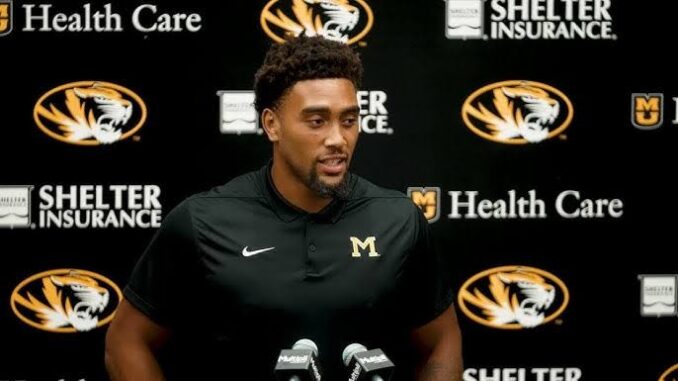
The burgeoning era of Name, Image, and Likeness (NIL) in college sports has birthed a potentially precedent-setting legal battle, as the University of Georgia Athletic Association (UGAA) has filed a lawsuit seeking $390,000 in damages from former Bulldogs defensive end Damon Wilson II, who transferred to the Missouri Tigers. This case is shaping up to be a pivotal moment, testing the enforceability of contractual clauses designed to protect institutional investments in the volatile landscape of the transfer portal.
The Contractual Dispute
The core of the dispute revolves around a 14-month NIL contract Wilson signed with the Classic City Collective—Georgia’s official NIL partner—in December 2024, shortly before the end of the season. The agreement was reportedly worth a total of $500,000, structured to be paid out in $30,000 monthly installments, plus two $40,000 bonus payments.
Crucially, the contract included a “liquidated damages” clause. This clause stipulated that if Wilson were to leave the team or enter the transfer portal before the contract’s expiration, he would owe the collective a lump-sum payment equal to all the remaining unpaid fees of the agreement. Wilson reportedly received a single $30,000 payment before entering the transfer portal in January 2025 and subsequently committing to the University of Missouri.
The Lawsuit and Legal Precedent
After Wilson’s transfer, the Classic City Collective terminated the agreement and demanded the remaining $390,000. The rights to these damages were later assigned to the UGAA in July 2025. The UGAA is now seeking to compel Wilson into arbitration, a mandatory dispute-resolution process outlined in the original contract, arguing that he breached the binding agreement.
The case has drawn significant attention because Georgia is one of the first major athletic departments to publicly and aggressively attempt to enforce a liquidated damages clause against a transferring athlete. Such clauses are becoming common in NIL agreements as schools and collectives attempt to deter “one-and-done” NIL deals and protect their financial commitments to players.
The Stakes and Implications
Wilson’s attorney has stated that after all the facts come out, people will be “shocked at how the University of Georgia treated a student-athlete,” suggesting a vigorous defense. Legal experts are closely watching to see if the court will uphold the $390,000 as a reasonable reflection of the financial harm caused by the breach, or if it will be viewed as an unenforceable punitive penalty meant to restrict a player’s mobility.
If Georgia prevails, it would establish a powerful legal precedent, effectively transforming portions of NIL contracts into buyout clauses similar to those governing coaches, significantly reshaping player movement and the balance of power in college football. Conversely, a victory for Wilson could weaken the collective’s ability to protect multi-year NIL investments, further destabilizing the transfer portal landscape. The resolution of this lawsuit will likely have a massive, lasting impact on how NIL deals are structured and enforced across
college athletics.


Be the first to comment