While much of the public conversation surrounding Everton in recent weeks has centered on resilience, stadium optimism, and fighting for European places, a quieter and far more complicated debate is simmering beneath the surface around the club’s coaching direction.
Despite strong stretches of form earlier in the 2026-27 Premier League campaign, not everyone connected to Everton is celebrating without reservation, with subtle pushback emerging over managerial uncertainty, tough disciplinary calls, and where the club’s dugout is truly headed next.
Coming immediately off the back of Monday night’s bruising 4-0 defeat away to Brentford at the Gtech Community Stadium, which saw captain James Tarkowski sent off and halted Everton’s push toward the top five, the cracks in consensus around the coaching setup have suddenly become much harder to ignore.
THE REALITY BEHIND EVERTON’S COACHING DEBATE
To understand why quiet pushback exists inside Everton right now, it helps to separate headline optics from the actual day-to-day reality on Merseyside.
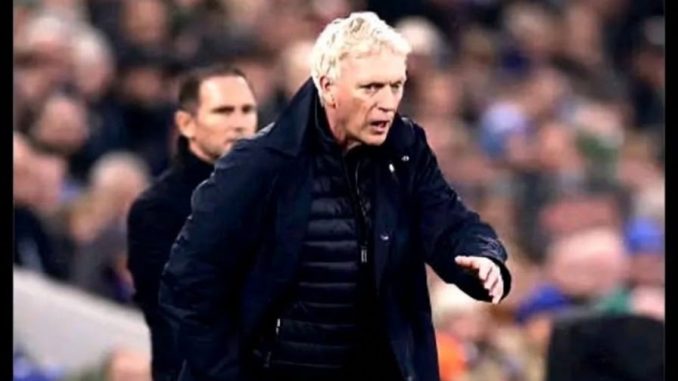
First, it is important to note that Everton have not just unveiled a brand-new men’s first-team manager this week, as David Moyes remains firmly in charge of the senior squad, having just taken charge of his milestone 593rd match for the club against Brentford.
At the same time, Everton Women are navigating early teething pains under boss Brian Sorensen or Phelan following recent cup disappointment, while speculation over who could become Everton’s next permanent men’s manager if ownership changes hands or Moyes departs at the end of the season continues to swirl relentlessly.
Because Moyes’s current contract at Hill Dickinson Stadium is due to expire at the end of the 2026-27 season, every tactical decision, squad exile, and ownership rumor is being viewed through the lens of whether the current coaching regime represents long-term progress or a temporary bridge.
That ambiguity has left sections of the dressing room, the fanbase, and club insiders divided on what comes next, creating a low-level tension that sits just below the surface even during good runs of form.
HARDLINE DISCIPLINE AND SQUAD EXILE SPARK QUIET FRICTION
Nowhere has the friction around coaching authority been clearer than in the handling of Jack Grealish following his return to Merseyside.
Prior to late October, Grealish had established himself as a regular fixture in the starting lineup, stringing together four consecutive starts and offering vital creativity in the final third.
However, after an internal breach of club discipline led to Grealish being axed from the squad for the Carabao Cup tie and subsequently left out again against Newcastle United, Moyes stood firmly behind the punishment and made clear that no single player sits above team standards.
“You probably know I’m not going to give any details. It’s a club decision. I support the decision, but it’s a club decision,” Moyes stated at the time, emphasizing the need for humility across a relatively small squad.
While disciplinarians applauded the message that standards must never slip, losing one of the squad’s most gifted attacking outlets during a demanding stretch of fixtures inevitably raises quiet questions behind closed doors.
In a small squad where margins are razor thin, prolonged squad exiles and rigid selection hierarchies can test patience among players who feel the team needs all of its best talent on the pitch rather than training away from the main group.
TACTICAL GROWING PAINS AND THE BRENTFORD WAKE-UP CALL
On the pitch itself, Everton’s 2026-27 campaign has been a study in contrasts that fuels both optimism and skepticism.
Earlier in the autumn, an impressive run that included a disciplined 1-0 away win at Newcastle United and progression to the Carabao Cup quarter-finals lifted Everton within three points of the top four and sparked talk of offering Moyes a new contract sooner rather than later.
Yet before that surge, back-to-back 2-0 defeats against Chelsea and Arsenal had already exposed a lingering malaise and prompted warnings about complacency creeping into the dressing room when pressure eased.
Those concerns roared back to life on Monday night when Brentford dismantled Everton 4-0 in west London, a night where Keane Lewis-Potter scored twice in three first-half minutes, James Tarkowski saw red for a high follow-through on Yehor Yarmoliuk, and Moyes admitted afterward that his players’ collapse left him baffled.
Defender Jake O’Brien issued a blunt apology after the final whistle, admitting the performance was “really bad from start to finish” and resulted from a knock-on effect of poor decisions and costly mistakes.
When a side with top-five ambitions unravels so dramatically in a milestone fixture, quiet doubts naturally resurface about tactical flexibility, in-game adjustments, and whether the coaching setup can sustain consistency across an unforgiving winter schedule.
OWNERSHIP UNCERTAINTY AND NEXT-MANAGER RUMORS FUEL INSTABILITY
Adding further fuel to the quiet pushback around the coaching picture is the ongoing uncertainty above the dugout.
With reports indicating that The Friedkin Group remain open to offers around their £800 million valuation and preliminary interest emerging from the United States, nobody inside Finch Farm can say with absolute certainty what Everton’s leadership structure will look like in 2027.
Speculation linking figures like Amanda Staveley with a potential future role and placing Eddie Howe near the top of hypothetical managerial shortlists only reinforces the sense that a change in the dugout could still arrive if new owners take control.
At the same time, international links refusing to go away around Moyes and the Scotland national team job keep reminding everyone that the current arrangement has an expiration date unless formal contract talks are concluded.
For players, staff, and supporters alike, operating in a state of contractual and ownership flux makes total alignment difficult.
Some voices inside and around the club believe rewarding stability and extending Moyes is the smartest way to protect Everton’s progress at Hill Dickinson Stadium.
Others quietly argue that Everton must avoid locking themselves into a short-term direction if a more progressive, long-term coaching vision becomes available next summer.
MERSEYSIDE DERBY PRESSURE WILL TEST UNITY IMMEDIATELY
Whatever quiet pushback exists behind the scenes at Everton will be put to the ultimate test this Sunday when Liverpool visit Hill Dickinson Stadium for a massive Merseyside derby.
Facing a fierce local rival brimming with confidence after a 4-0 thrashing of Manchester United, while missing suspended captain James Tarkowski in the heart of defense, leaves zero room for internal hesitation or divided focus.
If Everton respond with grit, organization, and a statement derby performance, the noise surrounding coaching direction, squad discipline, and contract uncertainty will quickly quiet down.
If another flat display follows Monday’s humbling at Brentford, however, those quiet whispers of discontent inside and around Everton could rapidly turn into a roar that nobody at the club can ignore.
Be the first to comment